
"wood pulp"
400 article(s) found

Why is coffee powder suitable for brewing only once? this paper introduces the principle and characteristics of coffee extraction.
People often ask: can't you make another cup of coffee grounds left over from brewing coffee? What a waste! In fact, it is not just a matter of one or two words to explain this problem clearly. We should start with the characteristics of coffee beans. Coffee cooked beans are composed of soluble aromatic substances (about 30%) and wood fibers (about 70%), but not all of them are extracted best when extracting aromatic substances.

What is the baking of Costa Rica SHB Black Honey Coffee beans? description of the flavor of Tarazu Gable Manor beans
Professional coffee knowledge exchange more coffee bean information please follow the coffee workshop (Wechat official account cafe_style) Costa Rica Tarrazn Gamboa Black Honey SHB EP Costa Rican coffee Tara Pearl Gable Manor Black Honey treatment SHB European Taste Spectrum: longan Sweet Honey fragrance smooth and mellow Origin: Costa Rica Tara Pearl Gable Manor Diamond Hill processing Plant

Japanese hand-washed filter paper 101 trapezoidal filter cup coffee filter cup special coffee unbleached filter paper
Original imported from Japan, environmentally friendly log pulp manufacturing. It is a good choice for three-hole trapezoidal filter cup.

The Evolution of Coffee Soybean Honey treatment process and processing method what's going on in the treatment of coffee raw bean gold honey
Professional coffee knowledge exchange more coffee bean information please follow the coffee workshop (Wechat official account cafe_style) pulp treatment refers to what honey treatment has changed the raw bean treatment which step preface: honey treatment of coffee, honey-like treatment, what a beautiful coffee term! Just this simple description can move people (after all, most people like it.

Flavor and taste characteristics of Indonesian coffee beans in addition to Java coffee in Sumatra Aceh
Although the Indonesian island of Java has become famous in the coffee industry, Arabica coffee production in Sumatra began only under Dutch colonial rule in the 1700s. Aceh, located at the northern end of the island around Lake Tawar, was the first area to start growing coffee and is known for its complex characteristics of fruit, soil and wood, mainly from their traditional name gilling.

Introduction to Grinding scale of Coffee Bean Flavor description treatment method in Xidamoguji, Ethiopia
Ethiopian Sidamoguji coffee bean flavor description grinding scale introduction properly treated Sidamo flavor is not discounted, in addition to the citrus flavor of washed beans, there is a strong berry flavor. This is related to the fact that coffee beans are dried in the pulp and fermented for up to two weeks. This flavor is not commonly found in washed beans. But if the sun is not handled properly, it is easy to smell like dirt.

This is the reason why the second brewed coffee is not good!
Ground coffee beans can only be brewed once and can no longer be used. Some people feel that this is a pity and have brewed for the second time. However, the taste of the second cup is not a little bit worse, can be described as bad. They are all the same coffee beans, why is it bad for the second time? the reason lies in the composition of the coffee beans. Let's follow the editor to pull out the cocoons.
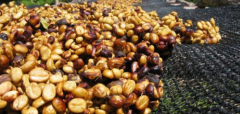
Imported Coffee Wholesale Costa Rica Arabica Honey processing Coffee beans Coffee characteristics
Costa Rican coffee cultivation was introduced from Cuba in 1779 and exported for the first time in 1820. There are now about 32000 coffee farmers, with an average planting area of less than one hectare (10000 tons) per farmer. Costa Rica has a population of 41 billion (2006), with a coffee planting area of 82500 hectares and an annual production of 1.7 million bags (60kgs per bag). The annual domestic consumption is 380000 bags.
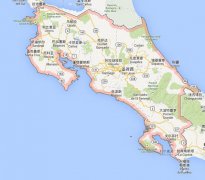
Costa Rican Arabica Coffee, a big coffee country in southern Central America
Costa Rican coffee cultivation was introduced from Cuba in 1779 and exported for the first time in 1820. There are now about 32000 coffee farmers, with an average planting area of less than one hectare (10000 tons) per farmer. Costa Rica has a population of 41 billion (2006), with a coffee planting area of 82500 hectares and an annual production of 1.7 million bags (60kgs per bag). The annual domestic consumption is 380000 bags.

Flavor description of Brazilian Hilado Coffee A brief introduction to the varieties treated in the manor area
I was able to clarify how coffee beans on the farm were born and in Serrado, TOC's Serrado program, whose growth and at any time presented agricultural quality information, traceability verifiability (traceable detector) provided. TOC Program Serrado (CERRAD traceable Origin Coffee Project) is the accumulation of research results to date, their own quality bean Serado persistence, and the establishment of
One of the necessary artifacts for baristas, smell the bottle and identify 36 flavors.
Professional coffee knowledge exchange more coffee bean information please follow the coffee workshop (Wechat official account cafe_style) is similar to the wine nose Le Nez Du Vin, coffee smell bottle is also a sharp weapon for coffee lovers to train their sense of smell. Coffee fans and baristas, coffee roasters, and Qgrader all have this on their own. The specific understanding and memory of the smell should be based on personal experience.

Flavor description of Brazilian Hilado Coffee Variety introduction of Regional treatment method for Manor production
Brazilian Hilado Coffee Flavor describes the taste of manor-produced regional treatment varieties introduce hand-picked ripe coffee beans in the coffee treatment Serrado is harvested for its own production. Drawn by each grain is superior in the sweetness of experienced cherry cultivation, but the quality and popularity of Serrado owns NO.1, which is a rare crop annual agreement that determines a quantitative yield limit. Number one in Japan

Can you smell all the common aromas of 36 kinds of coffee in SCAA textbooks?
Exchange of professional baristas Please follow the Coffee Workshop (Wechat official account cafe_style) the American boutique Coffee Association (SCAA) training cup tester's teaching materials, there is a variety of aroma in small bottles of liquid, which is a way to train olfactory memory, but also so that cup testers in the evaluation of coffee can have a common language and tools to describe the aroma of coffee. The following is the usual

What does half-sun volcano treatment mean? How to distinguish between honey treatment and half-sun coffee beans?
Professional coffee knowledge exchange more information about coffee beans Please follow the coffee workshop (Wechat official account cafe_style) We often hear about the sun, honey treatment, washing and so on in coffee shops, which refers to the different ways of handling raw beans. When coffee still grows on the tree with peel and pulp, it is called coffee cherry. Coffee beans are only used in the middle of the seed and picked.
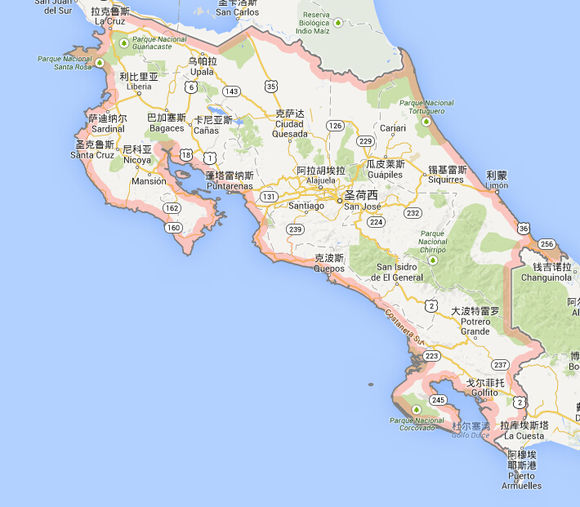
What is the difference in flavor between yellow honey, red honey and black honey in Costa Rican honey treatment?
Costa Rican coffee cultivation was introduced from Cuba in 1779 and exported for the first time in 1820. There are now about 32000 coffee farmers, with an average planting area of less than one hectare (10000 tons) per farmer. Costa Rica has a population of 41 billion (2006), with a coffee planting area of 82500 hectares and an annual production of 1.7 million bags (60kgs per bag). The annual domestic consumption is 380000 bags.
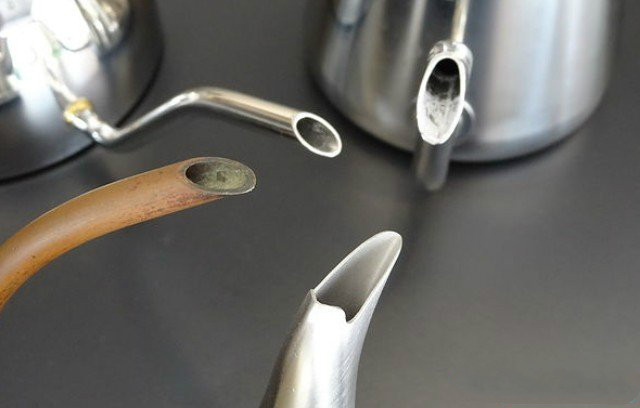
Classic hand coffee filter pot HARIO cloud stainless steel thin mouth pot hand how to make the brand of coffee pot
How do you get a good cup of coffee? Teach you how to make good coffee through 5 kinds of hand coffee pots. Compared with ordinary mechanical operation, hand brewing pot is more skill and charming feel, through the coffee powder thickness, water temperature, time control, from a series of visual, olfactory, taste and other experiences, into the world of hand coffee. 4 keys to make a good cup of coffee Tips1: through large

Ninety Plus Nekisse N2 | what is the price of honey kiss raw beans? what is the taste of honey kiss coffee?
Professional coffee knowledge exchange more coffee bean information please follow the coffee workshop (Wechat official account cafe_style) Ninety Plus Nekisse N2-Honey Kiss Coffee Bean name: 90 + Honeykiss N2 country: Ethiopia production area: Wellega/Sidama Grade: L12 altitude: 1750-2000m Variety: Heirlooms Flavor description: peach, jam, passion fruit

Boutique coffee tasting and taste training | how should beginners develop their own sense of taste?
Professional coffee knowledge exchange more coffee bean information please follow the coffee workshop (Wechat official account cafe_style) Today the editor will introduce to you the taste of coffee why the third wave of boutique coffee is so attractive, and how to develop your own taste. In the past, people often heard about the fragrant smell of coffee, but now you may also hear it in addition to the delicious smell of coffee.

Coffee Bean roasting Coffee roasting and Coffee Flavor Wheel
Deep baking highlights that light roasting of wood incense can highlight the bright smell of sour flowers, grass and fruit, but hopeless deep-baked fans fall in love with resin incense, smelling, choking aroma and alcohol smell, which is the product of Mena reaction and dry distillation. (resin composition: pine and cypress Pinaceae and Taxodiaceae, both secrete olefins with spicy aroma to protect against insect pests or squirrels.) dry distillation
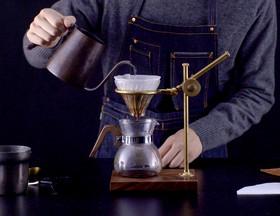
Why does the second brew of coffee taste bad? what are the reasons?
When the water constantly washes away the coffee powder, the aromatic substances are constantly released. When about 22% of the aromatic substances are taken out, if you continue to inject water, the liquid will have a miscellaneous smell, just like repeatedly squeezing the fiber of sugarcane. The soluble substances of coffee contain aromatic substances with medium and low molecular weight, as well as insoluble substances with high molecular weight, which are released first according to the rate of dissolution.